Reading Glasses for the Apple Mini Ipad
Apple tree'due south Augmented and Virtual Reality Work
Contents
- Apple's Augmented and Virtual Reality Work
- AR/VR Headset
- Design
- Display
- Cameras
- Control Methods
- Processors
- realityOS Operating Organisation
- WiFi 6E
- Evolution Troubles
- Development History
- Pricing
- Release Date
- Apple Glasses
- Apple'southward AR/VR Team
- AR/VR Acquisitions and Partnerships
- AR/VR Patents
- Second-Generation AR/VR Headset
- Apple'due south Future AR/VR Plans
- Apple Glasses Timeline
Apple tree has been exploring virtual reality and augmented reality technologies for almost 20 years based on patent filings, just with virtual and augmented reality exploding in popularity with the launch of ARKit, Apple'due south dabbling is growing more serious and is expected to pb to an AR/VR product in 2022 or 2023.
In that location is a enquiry unit within Apple tree with hundreds of employees working on AR and VR and exploring ways the emerging technologies could be used in hereafter Apple products. AR/VR hiring has ramped up over the last several years, and Apple tree has acquired multiple AR/VR companies as it furthers its work in the AR/VR space.
Apple is working on at to the lowest degree 2 AR projects that include an augmented reality headset fix to be released in late 2022 or 2023 followed past a sleeker pair of augmented reality glasses coming at a later date. The ii projects accept caused some confusion over what's coming when, only it'southward now clear that an AR/VR (or mixed reality) headset will exist released, followed by augmented reality glasses.
Rumors initially suggested that Apple's AR/VR headset would come out at some point in 2022, mayhap at WWDC in June, but there are evolution bug that Apple needs to overcome. At this indicate, it's looking like nosotros won't encounter the AR/VR headset until late 2022 or 2023.
Reliable sources similar Apple tree analyst Ming-Chi Kuo and Bloomberg's Mark Gurman have indicated that the headset will likely see a 2023 launch date, with the glasses to follow in 2024 or 2025.
The AR/VR headset that Apple has in the works will be a standalone device with powerful A-series processors that volition put performance on par with Apple's Macs. Information technology will have two chips within that will allow it to perform complex tasks and handle the virtual reality capabilities, plus it will be able to operate independently of an iPhone or a Mac.
Design wise, the headset volition expect similar to other headsets on the market similar the Facebook Oculus Quest, but information technology volition feature a sleeker design and a lightweight build to ensure condolement. Two high-resolution micro OLED displays with up to 3,000 pixels per inch will provide an immersive viewing experience, and there may also exist an extra display at the side for peripheral vision.
Apple is building more than a dozen cameras into the headset to track mitt movements and gestures, which will exist ane method of control along with eye tracking. Apple may also include worn input devices, ane of which may resemble a thimble worn on the finger.
Multiple 3D-sensing modules will be included for detecting mitt gestures and objects that are around the wearer, and it will support voice control, skin detection, spatial detection, and expression detection. Along with an immersive video experience, the headset volition likewise employ spatial sound for immersive audio.
Apple is designing an App Shop for the headset, and content will focus on gaming, streaming video, and video conferencing. It will run "rOS," a new operating system designed specifically for the headset.
As the AR/VR headset is an entirely new product category adopting cut-edge engineering science, it's not going to exist cheap. Rumors suggest it could be priced over $two,000.
The headset will focus on VR with some limited AR capabilities, but Apple has deeper augmented reality ambitions. After the AR/VR headset, Apple is expected to come out with a set of augmented reality spectacles that will look similar to standard glasses but with AR capabilities.
Notation: See an error in this roundup or want to offering feedback? Transport us an email here.
AR/VR Headset
Apple's first headset will support both AR and VR capabilities, technology that'southward usually referred to as "mixed reality." Augmented reality (AR) and virtual reality (VR) are similar technologies, but their potential applications vary significantly.
Virtual reality refers to a full immersive experience in a virtual globe, while augmented reality refers to a modified view of the real world. With a VR experience, the existent world is largely shut out to focus on an entirely virtual experience, but augmented reality overlays virtual elements on your existent-world view.
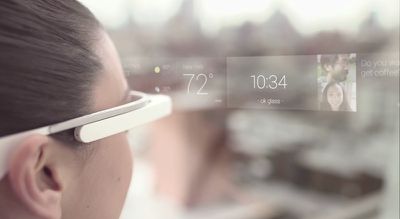
Google Glass, a Google production that'southward now largely defunct, is an example of a caput-worn augmented reality device, while the Oculus and PlayStation VR are examples of head-worn virtual reality devices. Apple tree is working on both of these technologies, merely the initial product volition be more than similar to the Oculus than Google Glass.
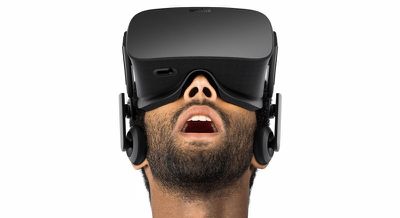
Virtual reality is singularly focused on immersive content consumption because it makes the wearer feel every bit if they're really experiencing what's going on in the false earth through visual, tactile, and audio feedback. Virtual reality is linked to gaming right now, but information technology too has the potential to recreate real world experiences for educational or preparation purposes.
Augmented reality doesn't hinge on immersive content and while less heady because it'south augmenting reality instead of replacing it, it has a wider range of potential applications and information technology is the engineering that Apple ultimately seems to be most interested in. Apple tree's headset will back up both AR and VR, which is chosen mixed reality, and it's something we've seen in products similar Microsoft's HoloLens.
Mixed reality merges real-world content and virtual content to produce new environments where physical and digital objects can exist viewed and interacted with together. In practise, we don't quite however know what exact kind of feel Apple's headset will provide, only we tin count on immersive games, more interactive FaceTime and conversation experiences, and new learning tools.
Design
Apple'southward AR/VR headset will look similar to some other VR headsets on the market, featuring a blueprint that's not also far off from the Facebook Oculus Quest virtual reality headset. Several of the design details have been revealed in rumors, and The Information fifty-fifty saw a prototype so nosotros have a good thought of what to look.
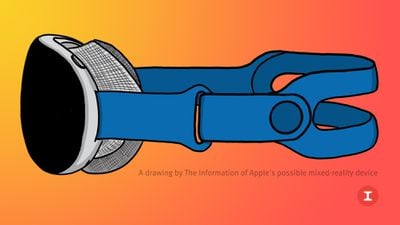
The headset volition apply fabrics and lightweight materials to ensure a comfy fit. It has been described equally having a "sleek, curved visor attached to the face by a mesh material and swappable headbands." The renders below from designer Ian Zelbo are based on these headset descriptions.
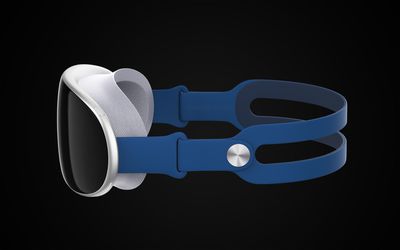
A band in the dorsum that's made of a textile similar to an Apple tree Watch band will agree the headset on the wearer's head, and a soft mesh will make the fit comfortable against the front of the face. Headbands are swappable, and come with size adjustment options.
One headband allegedly features spatial sound applied science like the AirPods Pro for a surroundings-sound like feel, while another provides additional battery life while on the go. The headset would too exist able to respond to the wearer'south middle movements and manus gestures, while one prototype of the headset also featured a physical dial on the visor's side.
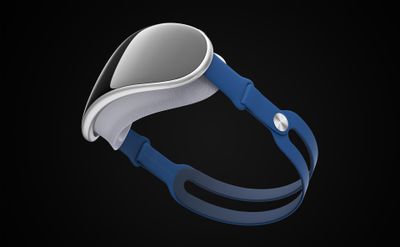
The pattern blocks out peripheral vision to forbid light from leaking into the wearer's field of view, and it'due south possible there will exist an outward-facing visor for showing graphics to others.
Current headset prototypes are said to counterbalance effectually 200 to 300 grams, merely Apple is aiming to reduce the final weight to 100 to 200 grams if technical problems can be solved, which would make the headset lighter than existing VR devices.
Display
Rumors suggest the AR/VR headset volition take two to three displays. In that location will be two high-resolution 4K micro OLED displays with upwards to 3,000 pixels per inch. Sony is expected to supply the display modules that Apple will apply.
Micro OLED displays are built directly on to chip wafers rather than a glass substrate, which results in displays that are thinner, smaller, and more power efficient. They permit for pixel sizes in the range of four to 20 micrometers, compared to xl to 300 micrometers with standard OLED panels, plus they have a faster microseconds response fourth dimension, making them ideal for augmented reality (AR) and virtual reality (VR) applications.
At that place may also exist a tertiary AMOLED brandish, which would exist lower quality. It's possible that Apple tree will utilize the AMOLED display for for peripheral vision where a lower resolution would exist acceptable.
Apple is using "Pancake" lenses that will allow for a sparse and lightweight design. Pancake lenses are more expensive than the Fresnel lens applied science used for other VR headsets, but will result in a much thinner device.
Because of the close fit of the headset to the face, users will not be able to clothing spectacles, and then there may be an option for prescription lenses to be inserted over the screens.
Cameras
The headset volition feature more than a dozen optical cameras for tracking manus movements, mapping the environment, and projecting visual experiences.
Eight camera modules will reportedly be used for meet-through augmented reality experiences for the user, while another six modules will be used for "innovative biometrics." I camera will also be available for environmental detection.
There will be a set of eye-detecting cameras that volition allegedly let users to "read small-scale type" and see other people standing in front of and backside virtual objects.
The headset will be able to map surfaces, edges, and dimensions of rooms with accuracy.
Command Methods
Apple is exploring several input methods for the AR/VR headset, including hand gestures, eye-tracking, and input from a article of clothing device connected to the headset.
An advanced eye-tracking system is said to provide an intuitive visual experience that interacts seamlessly with the external environment, plus it will facilitate controls with middle movements. Iris recognition will be included every bit role of the eye-tracking organization, which could exist an authentication method.
At that place volition be four 3D-sensing modules for detecting hand gestures and nearby objects through spatial detection, and the headset will as well feature voice control and support for Siri commands. It will also detect skin and information technology might exist able to monitor expression.
Apple is working on multiple control methods, including a "thimble-like device to be worn on a person'due south finger."
Processors
Two Mac-level processors volition be included in the AR/VR headset for unprecedented computing ability in a wearable device. The fries used for the headset are fifty-fifty more advanced than the Apple silicon chips that Apple tree is using for its Mac lineup, and Apple will reportedly adopt a 96W power adapter to accuse the headset due to the powerful chips.
There will be a high-finish main processor that's similar to the M1 Pro flake that Apple debuted for its Apple silicon Macs last twelvemonth, along with a lower-cease processor for managing the sensor-related aspects of the device. 1 of these chips is a 4-nanometer chip, which is the latest TSMC technology, and the other is a 5-nanometer fleck.
The headset will not exist reliant on an iPhone or Mac for processing power, and information technology volition feature contained power and storage.
Apple has completed work on the SoCs for the AR/VR headset, and will optimize for wireless data transmission, compressing and decompressing video, and power efficiency for maximum battery life, though they do non have a neural engine like some of Apple tree's other chips.
realityOS Operating Arrangement
The AR/VR headset is expected to run a new operating system called "realityOS," which stands for Reality Operating Arrangement. Hints of this naming take been found in Apple source code, so this is likely to be the name that Apple will go with.
Apple wants to create an App Store for the headset, with a focus on gaming, streaming video content, and video conferencing. It has been described by Bloomberg equally an "all-encompassing 3-D digital surround" designed for gaming, media consumption, and advice. Apple may be planning to work with media partners to create content that tin exist watched in VR, and at that place could be a VR FaceTime-like experience with Animojis and other features.
When FaceTiming someone, instead of seeing their bodily face, you lot might instead see a 3D Memoji-character version of them. The headset would be able to read facial expressions and features, matching that in real time for a lifelike chatting feel. SharePlay, the feature introduced in iOS 15, may besides be heavily integrated, and the headset is expected to integrate with existing Apple services like Apple TV+ and Apple Arcade.
WiFi 6E
Apple's upcoming mixed reality headset will offering WiFi 6E support, which is the latest WiFi specification. Apple is said to be planning to implement WiFi 6E to provide a loftier-end, immersive feel with solid wireless connectivity. WiFi 6E has all of the benefits of WiFi half-dozen but adds 6GHz spectrum in improver to the 2.4GHz and 5GHz bands for increased bandwidth and less interference between devices.
Evolution Troubles
Apple tree's AR/VR headset could be facing yet some other delay, every bit Apple tree is facing development bug that demand to be overcome. According to Bloomberg, Apple has pushed dorsum the release plans for the headset several times now. Apple originally planned to launch the headset in 2021 and transport information technology in 2022, and and then delayed that until the 2022 WWDC.
Now it'southward unlikely that we're going to go a glimpse of the headset at this year's Worldwide Developer Conference because Apple has withal to solve several problems. With the high-powered processor inside, the headset is overheating, and there are besides problems with the photographic camera and the software.
At to the lowest degree i of the chips designed for the headset is on par with the M1 Pro from the latest MacBook Pro models, and the thermal demands of the fleck are causing problems with heat dissipation.
Apple tree is because delaying the launch of the AR/VR headset until late 2022 or 2023, and the company's supply concatenation partners take been told that it is unlikely to be released until 2023. Apple is, however, pushing vendors to take units available by the cease of 2022.
With the delay, Apple is planning to focus on the headset during the 2023 Worldwide Developers Conference. Apple volition encourage developers to outset building augmented and virtual reality apps for the "rOS" App Store.
Evolution History
Apple has been working on augmented and virtual reality technologies for a long time now, and the company has a huge team of employees developing headworn AR/VR products. Information technology'south believed that in the future, AR/VR devices volition supersede the iPhone, something that could happen as soon as 10 years from now.
The iPhone is Apple'due south most profitable and of import production, then that AR/VR headset technology will replace the iPhone gives united states some idea of how fundamental it is to Apple tree's future.
Rumors suggest that the original headset design included a fan and powerful processors, simply the device was besides heavy. Early designs also would have required the headset to employ the processing ability of a connected iPhone or Mac, only Apple has inverse the blueprint and added loftier-stop chips to the headset itself.
Early on prototypes were described as having an 8K brandish for each eye, and at that place was one rumor that said the headset would connect to "defended box" using a high-speed short-range wireless technology called 60GHz WiGig. The box would be powered by a custom 5-nanometer Apple processor that'south "more than powerful than annihilation currently available." The box plainly resembles a PC tower, but it "won't be an actual Mac computer."
Internal disagreements shaped and changed Apple tree's goals for its AR headset over time, and rumors suggest that Apple did non go with the "box" design because former Apple tree designer Jony Ive did not want to sell a device that would crave a separate, stationary addition for full functionality.
Ive wanted a headset with less powerful technology that could be embedded directly in the device, but the leader of the AR/VR squad, Mike Rockwell, wanted the more than powerful device. Information technology was a standoff that lasted for months, and Tim Cook ultimately sided with Ive, irresolute the direction of Apple'south headset design.
Pricing
Pricing on the headset could showtime somewhere effectually $3,000, which will make it much more than expensive than an iPhone. To outset with, information technology won't exist aimed at full general consumers, simply volition instead be positioned equally a device for developers, content creators, and professionals.
Apple expects to sell but ane headset per day per retail store, and information technology has told suppliers that information technology expects sales of seven to 10 million units during the commencement year of availability.
Release Engagement
Apple tree was initially targeting WWDC 2022 as the unveiling engagement for the AR/VR headset, but due to the problems outlined above, it'south now looking like the earliest we might come across the headset is late 2022, with 2023 possibly being even more than probable.
Apple tree analyst Ming-Chi Kuo believes the headset will run across a tardily 2022 or 2023 launch, and Bloomberg's Mark Gurman recently said that while Apple was targeting mid-2022 for an unveiling, that'southward now been pushed back to the end of the year or 2023.
According to DigiTimes, Apple in February reportedly finished key production tests (EVT two) for its AR/VR headset, ensuring that prototype units are able to run across Apple tree's pattern goals and specifications. DigiTimes believes that the headset will enter mass production in the Baronial-September timeframe, with a launch to happen before the cease of the yr, but that is non in agreement with some of the other rumors that we've heard.
Apple Spectacles
Apple'southward AR/VR headset volition be followed by an augmented reality product, which rumors accept been calling the Apple tree Spectacles. The Apple tree Spectacles will be more of an everyday habiliment product than the headset, equally they will resemble traditional glasses.
The spectacles are said to look similar to regular glasses, with both lenses to feature displays that can be interacted with using gestures. There will be an option to get the spectacles with no prescription lenses at a possible starting price of $499, with prescription lenses available at an additional toll.
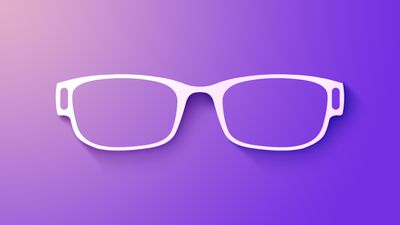
According to Bloomberg, the spectacles are in an early stage of evolution, fifty-fifty before than the AR/VR headset that Apple is working on. The spectacles have been described as "several years away."
Apple is allegedly planning to utilize "cutting edge" OLED microdisplays supplied past Sony for its rumored augmented reality glasses. Sony's OLED microdisplays feature an ultra-fast response charge per unit, ultra-high contrast, a wide color gamut, loftier luminance, low reflectance, and integrated drivers for a thin and lite blueprint. The glasses are said to feature a 0.5-inch brandish with a 1280x960 resolution.
Kuo expects the AR glasses to be marketed as an iPhone accompaniment and volition primarily accept a display role offloading computing, networking, and positioning to the iPhone, with the glasses providing a mobile-first "optical see-through AR experience." Offering the AR glasses as an iPhone accessory will permit Apple to keep them slim and lightweight.
Leaker Jon Prosser claims that the glasses will look like to Ray-Ban Wayfarers or the glasses that Tim Cook wears, while Bloomberg has said the current paradigm resembles loftier-end sunglasses with thick frames that house the battery and chips.

Prosser also says that Apple tree is working on a express-edition "Steve Jobs Heritage" version of the smart spectacles that are designed to look similar the circular, frameless glasses that Steve Jobs used to article of clothing, but Bloomberg's Marker Gurman has called this rumor "complete fiction."
Nosotros don't notwithstanding know when the Apple Glasses will launch, just since this product is expected later on the AR/VR headset, 2023 or 2024 seems like the earliest possible target date.
Apple's AR/VR Team
Apple tree'south work on virtual and augmented reality dates dorsum multiple years, just rumors picked upwards starting in March of 2015 when news hit that Apple tree had a pocket-sized squad of people working on augmented reality. In 2015 and into early 2016, Apple'due south team grew as the company hired employees with expertise in AR/VR technology and made multiple related acquisitions.
Apple'due south AR/VR squad includes several hundred engineers from beyond Apple, all of whom accept expertise in virtual and augmented reality. The team works across part parks in both Cupertino and Sunnyvale, and Apple is exploring several hardware and software projects under the code proper name "T288."
Apple'south augmented reality team combines "the strengths of its hardware and software veterans," and is led past Mike Rockwell, who came from Dolby. Former employees of companies like Oculus, Amazon (from the VR squad), Lytro, Microsoft, 3D animation company Weta Digital, and Lucasfilm are working on AR at Apple tree.
Erstwhile Apple hardware engineering science primary Dan Riccio in January 2021 transitioned to a new function where he is overseeing Apple's work on an AR/VR headset. The project has faced development challenges, and Apple execs believe that Riccio's focus may assistance.
Apple tree software executive Kim Vorrath is also on the augmented reality team, and she has been described as a "powerful forcefulness" making sure employees run across deadlines while also sussing out bugs.
Apple has hired a number of notable AR/VR and AI experts, including computer science professor Doug Bowman, old Magic Spring engineer Zeyu Li, former Oculus research scientist Yury Petrov, AR expert and former NASA employee Jeff Norris, VR app expert Sterling Crispin, and VR photographic camera maker Arthur van Hoff.
AR/VR Acquisitions and Partnerships
Many members of Apple's AR/VR squad may have joined the company though acquisitions. Since 2015, Apple has purchased several companies that created AR/VR-related products, and some of its AR/VR acquisitions even date back several years.
Akonia Holographics
Apple in August 2018 bought Akonia Holographics, a startup that makes lenses for augmented reality glasses. Akonia Holographics advertises the "world's first commercially available volume holographic reflective and waveguide optics for transparent display elements in smart glasses."
The displays that it makes are said to apply the company'due south HoloMirror technology for "ultra-clear, total-color performance" to enable the "thinnest, lightest head worn displays in the earth."
Vrvana
In November of 2017, Apple tree purchased Vrvana, a visitor that developed a mixed reality headset called Totem. Totem, which was never released to the public, was designed to combine both augmented and virtual reality technologies in a unmarried headset, merging full VR capabilities with laissez passer-through cameras to enable screen-based augmented reality features.
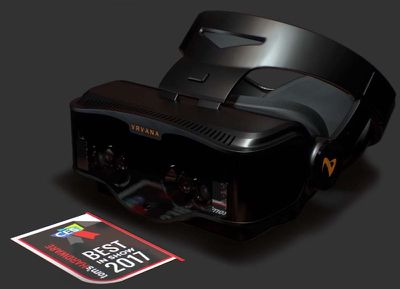
Totem essentially used a set of cameras to project real-world images into its congenital-in 1440p OLED display, a somewhat unique arroyo that set it apart from competing products similar Microsoft's HoloLens, which uses a transparent display to combine virtual and augmented reality. Apple tree could be planning to utilize some of Totem'due south engineering science in a hereafter production.
PrimeSense
Apple purchased Israeli-based 3D torso sensing business firm PrimeSense in 2013, sparking speculation that move-based capabilities would be implemented into the Apple TV. PrimeSense's 3D depth technology and motion sensing capabilities were used in Microsoft's initial Kinect platform.
PrimeSense used virtually-IR light to projection an invisible light into a room or a scene, which is then read by a CMOS image sensor to create a virtual image of an object or person. This enables motion-based controls for software interfaces, but it's also able to do things similar mensurate virtual objects and provide relative distances or sizes, useful for augmented reality applications like interactive gaming, indoor mapping, and more. PrimeSense technology can as well create highly authentic 360 caste scans of people and objects, potentially useful for virtual reality applications.
Metaio
Apple tree acquired augmented reality startup Metaio in May of 2015. Metaio built a product chosen the Metaio Creator, which could exist used to create augmented reality scenarios in only a few minutes. Prior to being purchased by Apple, Metaio's software was used by companies like Ferrari, who created an augmented reality showroom.
Metaio technology was also used in Berlin to allow people visiting the site of the Berlin Wall to use a smartphone or tablet to see what the area looked similar when the Berlin Wall was even so standing. Metaio's applied science is one that could potentially be used to implement augmented reality capabilities into Apple apps like Maps.
Faceshift
Apple acquired Faceshift in August of 2015, marking its second augmented reality buy in 2015. Before being acquired by Apple tree, Faceshift worked with game and animation studios on engineering science designed to quickly and accurately capture facial expressions using 3D sensors, transforming them into animated faces in real time. Faceshift was also working on a consumer-oriented production that would let people to morph their faces into cartoon or monster faces in existent time in Skype.
Faceshift'south engineering has a broad range of possible use cases, and Apple tree appears to be using the feature to ability Animoji in iPhones equipped with the front end-facing TrueDepth camera organization.
Emotient
Emotient, a company that built tools for facial expression assay, was acquired by Apple tree in January of 2016. Emotient'southward technology uses bogus intelligence and machine learning to read human emotion, features that have been used in the real world by advertisers to determine emotional reactions to advertisements.
There are dozens of things Apple tree could do with Emotient, ranging from better facial detection in the Photos app to analyzing customer feelings in Apple retail stores to unlocking iOS devices, but information technology also has potential AR/VR uses. Like Faceshift, Emotient'southward technology could be used to analyze and transform facial expressions for the creation of virtual avatars, useful for social media purposes and games. Emotient technology was likely used for Animoji.
Flyby Media
Purchased in early 2016, Flyby Media is another company that worked on augmented reality. Flyby created an app that worked with Google'due south 3D sensor-equipped "Project Tango" smartphone, allowing messages to exist fastened to real world objects and viewed by others with 1 of Google's devices.
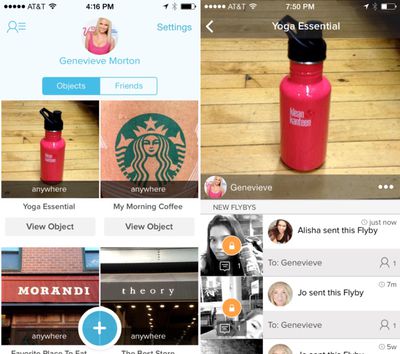
A await at the Flyby Messenger app before information technology was pulled from the App Store, via TechCrunch
For example, a person could "scan" a landmark like San Francisco's Golden Gate Bridge and write a bulletin attached to it. A person visiting the span after would then be able to scan the bridge with the Flyby app to meet the bulletin. The Flyby app likely drew the attending of Apple considering it was able to recognize and empathise different objects that were scanned, technology that could exist used by Apple in a number of ways in apps similar Photos and Maps.
RealFace
In Feb of 2017, Apple tree purchased RealFace, a cybersecurity and machine learning visitor that specializes in facial recognition engineering, which could potentially exist used for future augmented reality features.
RealFace adult facial recognition technology integrating artificial intelligence for frictionless face recognition. RealFace technology was probable employed in the iPhone X, Apple'south outset smartphone with facial recognition capabilities in the form of Face ID.
NextVR
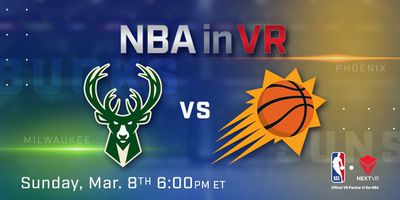
Apple in May 2020 acquired NextVR, a California-based company that combined virtual reality with sports, music, and entertainment, offering VR experiences for watching live events on VR headsets from PlayStation, HTC, Oculus, Google, Microsoft, and other manufacturers.
Spaces
Apple in August 2020 purchased VR startup Spaces, a company that designed virtual reality experiences that people could feel in malls and other locations, such as "Terminator Salvation: Fight for the Future." Spaces also created virtual reality experiences for video communication apps like Zoom, which is something that Apple tree could potentially contain into a time to come AR/VR product.
Valve
According to Taiwanese site DigiTimes, Apple is partnering with game developer Valve for its rumored AR headset. Valve released its first VR headset, Valve Index, in April 2019.
Valve previously worked with Apple to bring native VR headset support to macOS High Sierra, leveraging the eGPU support with a Mac version of the SteamVR software.
AR/VR Patents
Apple has filed multiple patents that relate straight to a virtual reality headset, all dating dorsum several years. While applied science has likely advanced somewhat beyond these, they provide an interesting look at the ideas Apple tree has explored in the past.
A 2008 patent application covered a fairly basic "personal display system" designed to mimic the experience of being in a movie theater when watching video.
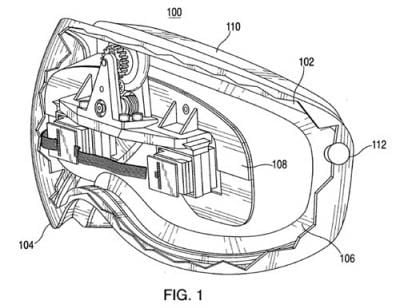
A second patent described a "Head Mounted Brandish System" with a "laser engine" that projected images onto a clear glass brandish worn over the eyes, similar to glasses. In this configuration, the headset connected to a handheld video actor such as an iPod to provide processing power.
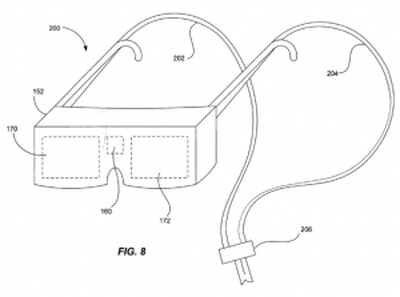
A 3rd patent originally filed for in 2008 was similar in design, covering a goggle-like video headset designed to permit users watch movies and other content. Information technology outlined two adjustable optical modules lined up with the user's middle, which could provide vision correction and allow for the viewing of 3D content. Apple described this as offer a personal media viewing experience.
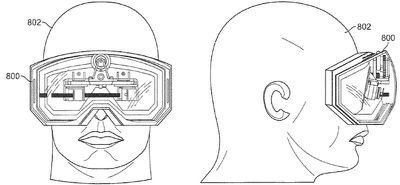
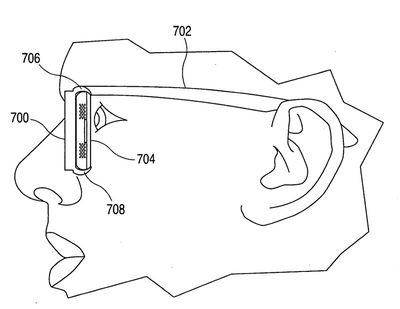
A fourth patent from 2008 covered a video headset frame like to the Google Drinking glass, which would allow a user to slide their iPhone or iPod into the headset to provide video. The headset was described as an augmented reality product that would allow users do things like lookout a video or bank check email while keeping an eye on their surroundings.
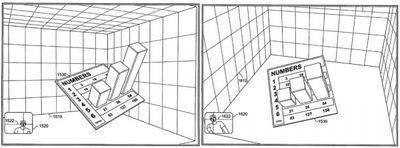
Beyond headset-related patents, Apple has also filed for patents describing other ways virtual and augmented reality features could be implemented into its devices. A 2009 patent application, for instance, covered camera-equipped 3D displays that would shift in perspective based on a user's relative position.
Such a display would observe head movement, assuasive a user to motility their caput effectually to wait at a 3D image from different angles while also incorporating elements of a user's environment.
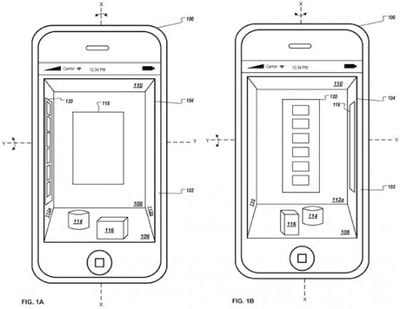
2010 and 2012 patents described the apply of motion sensors to create a 3D interface for iOS devices using augmented reality techniques. Apple described the interface as a "virtual room" navigated by manipulating the orientation of the device through born sensors or through gestures.
In 2011, Apple tree filed a patent for an augmented reality feature in the Maps app related to mapping the distance to notable landmarks. With the camera, a user could look at the area around them and become real-time estimations of the distance between two points forth with overlays of relevant information.
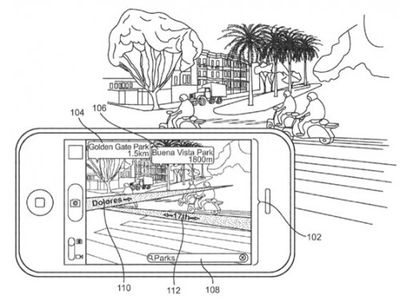
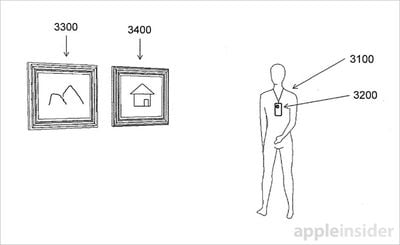
A patent filed in 2014 and granted in 2017 covers a mobile augmented reality arrangement able to notice objects in the environment and overlay them with virtual data through the use of cameras, a screen, and a user interface. Apple describes the system as platonic for a head-mounted display, but information technology also shows information technology existence used in smartphones.
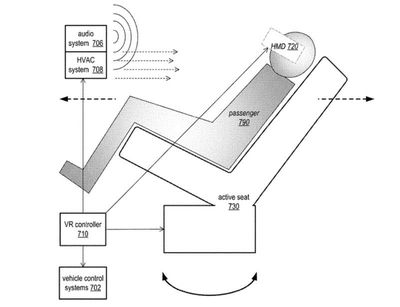
Apple has been working on virtual reality technology that could exist used within autonomous vehicles. Several Apple tree patents describe a system that includes an in-machine virtual reality arrangement with a VR headset worn to provide entertainment and to mitigate carsickness from tasks similar reading and working while a vehicle is in motion.
A July 2020 patent application covers possible input methods with Apple tree Spectacles, describing a arrangement where the glasses utilise infrared heat sensing to detect when someone touches a real-world object, allowing the glasses to then projection controls onto a real-world surface.
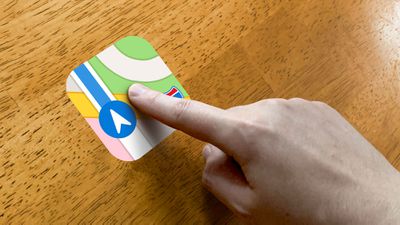
With this method, the Apple Glasses could projection in AR control interface onto any actual object in the real world for a mixed reality overlay kind of effect.
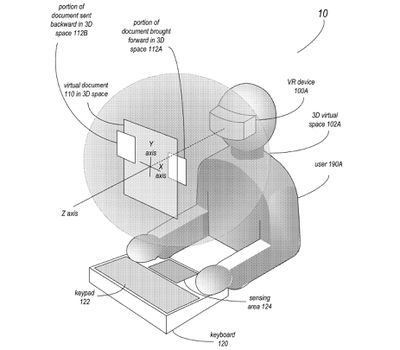
Apple in February 2021 filed a number of patents related to its work on a rumored mixed reality headset, with the patents covering design elements, lens adjustment, centre-tracking technology, and software.
Apple has developed several methods for making a headset more comfortable to wear while also keeping it secure and blocking out low-cal, plus there'south a detailed lens-adjustment system that uses fluid to seamlessly shift the lenses to make the fit customized for each user.
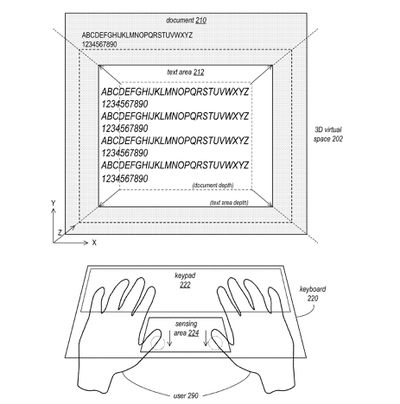
Apple also details an center-tracking organisation that uses infrared light to detect position, and at that place's as well a patent on how documents might be able to be edited in a virtual 3D space using the headset and gesture detection.
Apple tree has patented systems for recording video from a headset, where built-in gaze-tracking sensors could provide an indication of where a person is currently looking, which could directly a born camera to tape the scene where the user's optics are positioned, instead of simply recording what is in front of the user.
Another patent application filed in February 2021 showed that Apple is researching a finger-mounted device with an array of sensors and haptic feedback to be used as a control device for a mixed-reality headset.
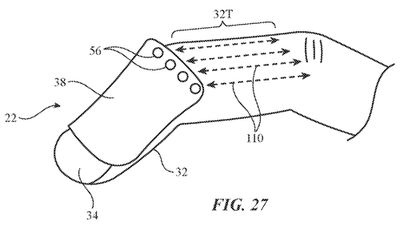
The control device has a shape that allows users to feel objects in their environment naturally and can precisely ascertain the way in which the user is moving their finger and interacting with surfaces. The organization is said to be so accurate that it can find how hard a user is pressing on a surface and the exact direction of this forcefulness, delivering haptic feedback in response.
Coupled with an AR or VR headset, Apple says that this finger-mounted device could "provide a user with the sensation of interacting on a physical keyboard when the user is making finger taps on a tabular array surface" or "let a user to supply joystick-type input" for gaming using but the motility of the user'due south fingertips.
2d-Generation AR/VR Headset
Though the get-go-generation AR/VR headset has yet to launch, Apple is already working on the second-generation version, co-ordinate to Apple annotator Ming-Chi Kuo. The AR/VR headset coming in 2024 is expected to feature an updated design that'south lighter, plus it will have a new bombardment system and a faster processor.
Apple's Future AR/VR Plans
Apple tree annotator Ming-Chi Kuo believes that Apple could be planning augmented reality "contact lenses" that could launch sometime in the 2030s.
According to Kuo, the lenses volition bring electronics from the era of "visible computing" to "invisible calculating." In that location is "no visibility" for the contact lenses at the current time, and information technology's not a guaranteed product that Apple will develop.
Source: https://www.macrumors.com/roundup/apple-glasses/
0 Response to "Reading Glasses for the Apple Mini Ipad"
Publicar un comentario